
Industry Insights
How Does a Scrap Metal Baler Work
A scrap metal baler works by using hydraulic force to compress loose metal into compact bales. Scrap enters a reinforced chamber, hydraulic rams reduce its volume, and the finished bale is discharged for handling, storage, or transport. The exact compression sequence depends on the machine’s design.
For scrap yards and manufacturing plants, hydraulic compression turns irregular, space-consuming material into manageable loads. Industrial balers can process ferrous and non-ferrous scrap, including sheet metal, punching waste, and other materials approved for the specific machine.
The Main Components of a Scrap Metal Baler
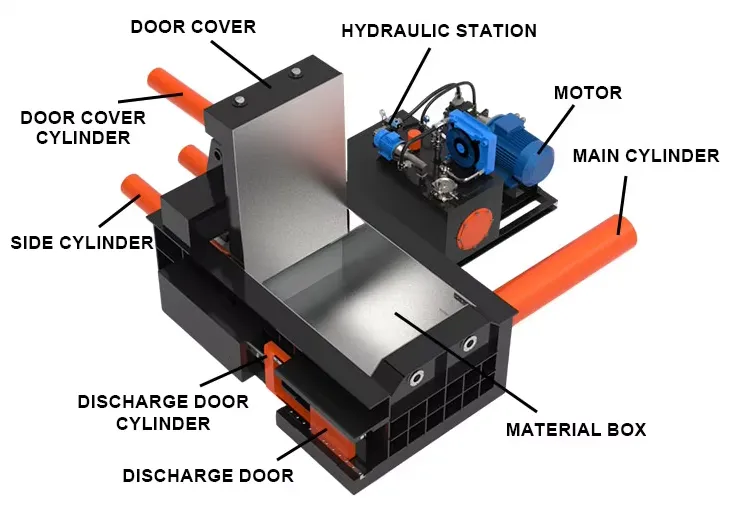
Although configurations vary, a hydraulic metal baler generally includes:
· A charging chamber that receives the scrap.
· Hydraulic cylinders and compression rams that form the bale.
· A hydraulic power unit that supplies pressurized oil.
· A reinforced frame that withstands compression loads.
· A control system that coordinates machine movements.
· A discharge mechanism that removes the finished bale.
Some industrial machines use three coordinated compression stages to produce dense, repeatable bales. Others have different arrangements, so buyers should review the actual operating sequence rather than assume all balers work identically.
The Scrap Metal Baling Process: Step by Step
1. Prepare and Load the Scrap
The process starts with suitable feedstock. Operators check that the material falls within the machine’s limits for type, size, and thickness. Scrap is then loaded into the charging chamber using an appropriate loading method.
Consistent loading helps make each cycle more predictable. Oversized or unsuitable pieces should not be forced into a machine that was not designed to handle them.
2. Close the Chamber and Begin Compression
Depending on the design, a lid or compression ram closes over the material and begins reducing its volume. This initial movement collapses bulky scrap and removes some of the empty space between pieces.
On machines with multiple compression directions, subsequent rams further compact the material into the required cross-section. Their movement and sequence are controlled to form a consistent bale.
3. Apply Final Hydraulic Pressure
The hydraulic system supplies pressurized oil to the cylinders, creating the force that drives the rams. As compression continues, the scrap deforms and packs more tightly.
Finished bale quality depends on more than pressing force. Material characteristics, chamber dimensions, loading consistency, and compression control all affect the result. A higher-tonnage machine does not automatically produce the best bale for every application.
4. Discharge the Finished Bale
Once compression is complete, the machine releases and discharges the bale using its designed mechanism. Depending on the model, this may involve an ejector, opening door, or another discharge arrangement.
The machine then returns to its starting position for the next load. Operators should remain clear of the discharge area and follow the manufacturer’s handling procedures.


What Affects Baling Speed and Output?
Actual production depends on the complete workflow—not just the advertised press cycle. Loading delays, material variation, bale removal, and maintenance interruptions can all limit hourly output.
When comparing machines, ask suppliers to demonstrate performance using scrap similar to yours. Confirm the test material, loading method, finished bale dimensions, and operating conditions behind any capacity claim. Modern industrial balers may offer automated controls and monitoring to support repeatable cycles and production management.
Safe Operation and Maintenance
Balers create serious crushing hazards. Workers must never enter the chamber or attempt to clear a blockage while hazardous energy remains uncontrolled. Maintenance requires an appropriate lockout/tagout procedure addressing electrical, hydraulic, and other stored energy—not merely pressing the stop button.
Follow the manufacturer’s inspection schedule for hydraulic components, wear surfaces, structural parts, and any discharge-door locking mechanisms.
Choose a Baler Around Your Material
Understanding the baling cycle helps you evaluate whether a machine fits your operation. Start with your scrap type, incoming dimensions, daily volume, and downstream buyer’s bale requirements.
Send our factory your material photos, processing targets, and site details. We can review your application and recommend a suitable scrap metal baler configuration for technical evaluation.
Online message