
Hydraulic Scrap Metal Shears
Scrap metal shears for heavy mixed scrap and car bodies, scrap metal shears for daily yard cutting, stepped blade shears for fast cuts on light sections. Cutting force and blade length are sized after we see your daily tonnage. Spare blades in stock.
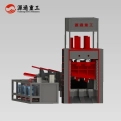

Hydraulic Gantry Shear
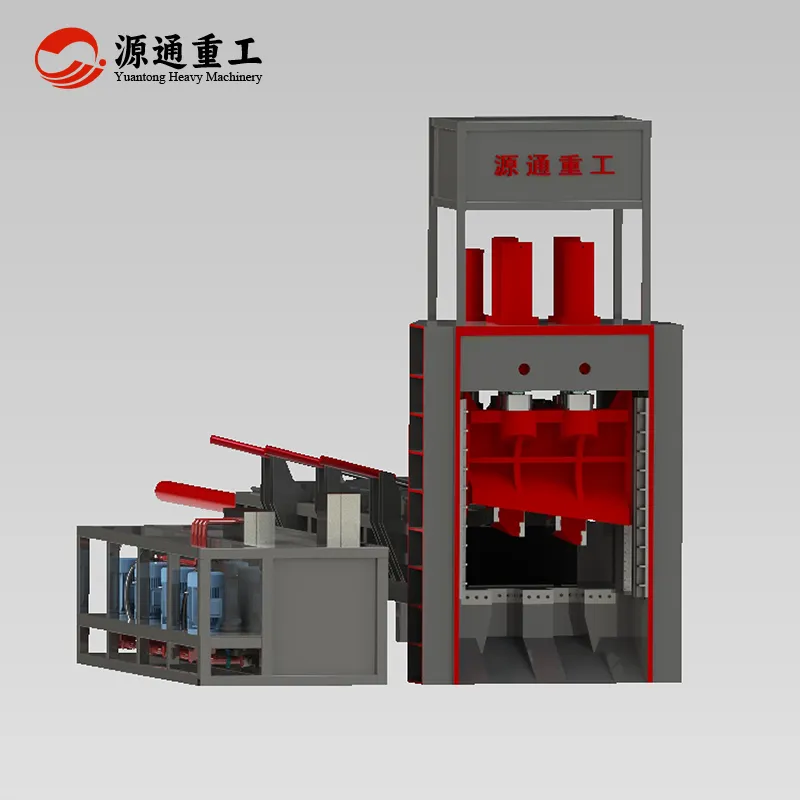
Hydraulic gantry shears are essential equipment in the metal recycling, smelting, and foundry industries, primarily used for the cold-shearing of scra...
Model:
Q91Y Series
Power:
74-460kw
Blade length:
1400-3000mm
Box size:
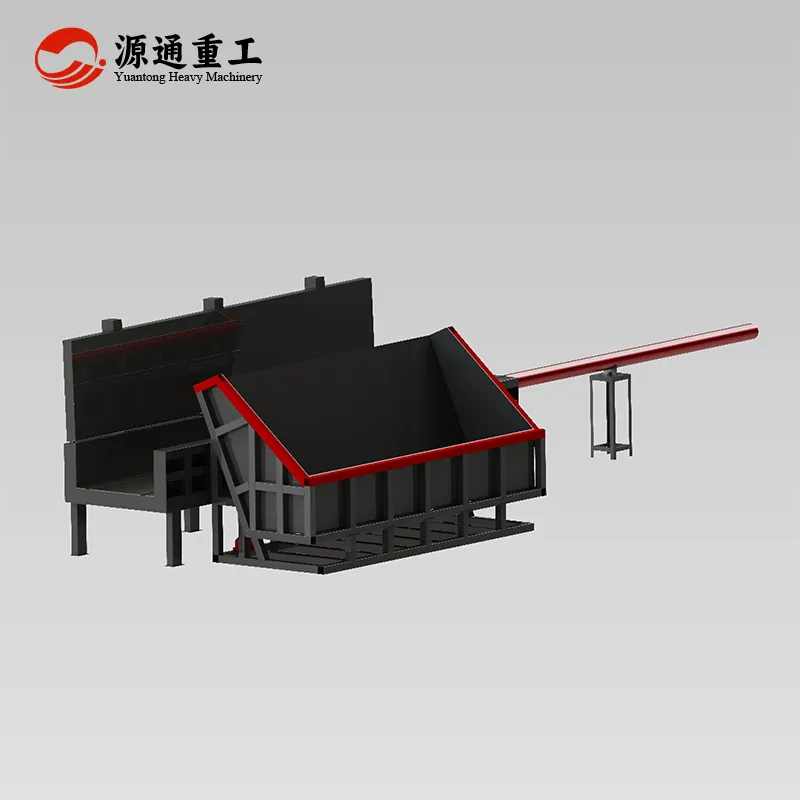
The width of the material box is generally the width of the blade, and the length is 6m or 8m.
Hydraulic Gantry Shear Product Introduction
The hydraulic gantry shear is a core piece of equipment used in metal recycling and smelting/casting industries for cold shearing scrap steel. Its primary task is processing large-section structural steel, end-of-life vehicle shells, ship plate, and similar incoming material into qualified furnace charge. Its value lies not in any single parameter being high, but in how well structural rigidity, hydraulic response, and feed adaptability match one another.
Structure and Working Principle
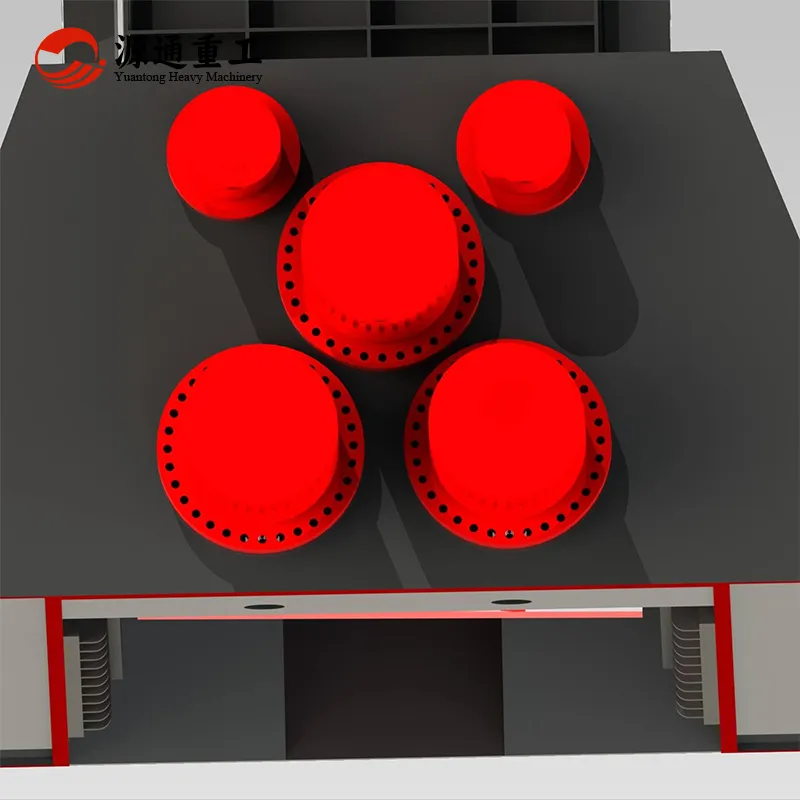
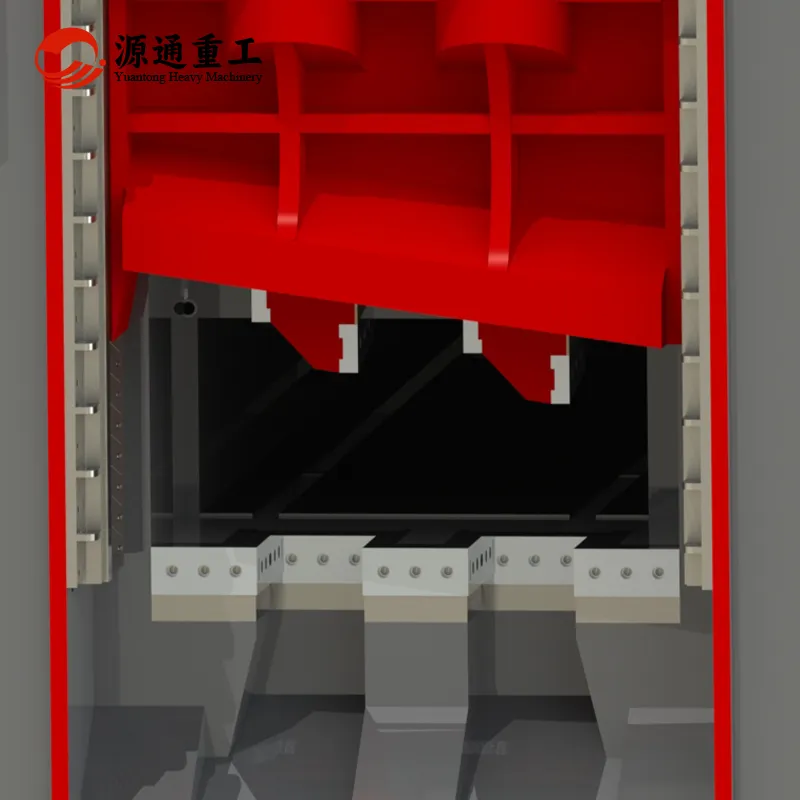
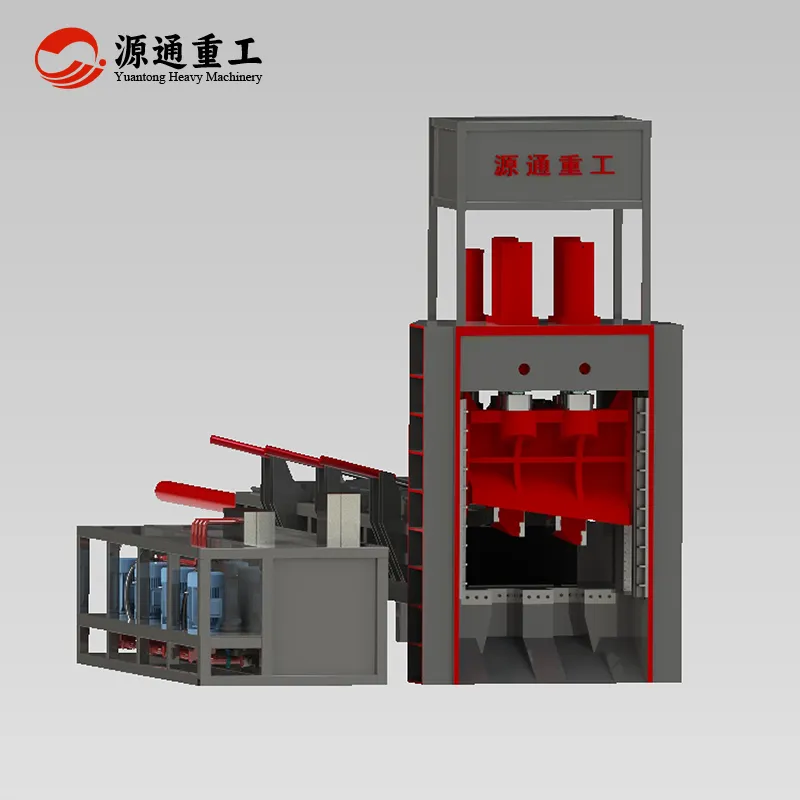
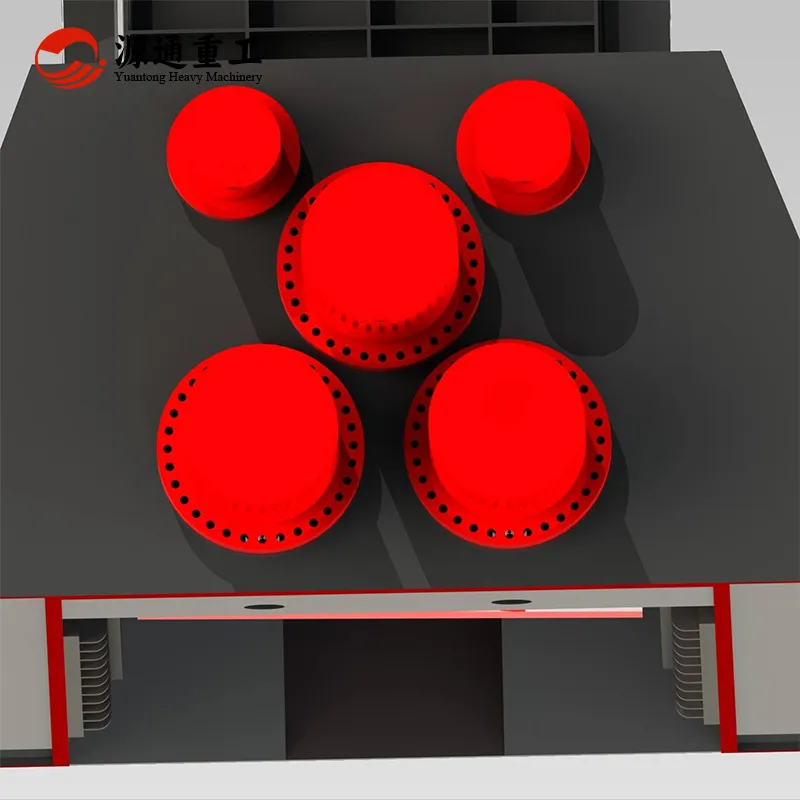
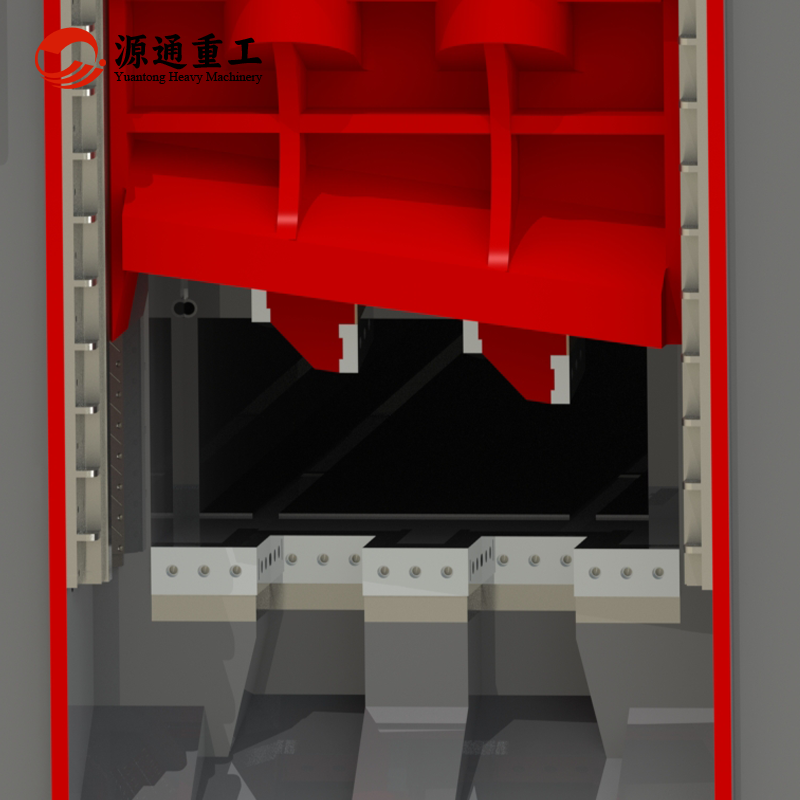
The gantry shear uses a portal frame to carry the full shearing reaction force. The machine base is welded from left and right side plates, an upper beam, and a lower beam. The side plates also serve as the slide guide seats; the lower beam fixes the lower blade seat; the upper beam mounts the shear cylinder and the hold-down cylinder. During shearing, the hold-down cylinder first drives the hold-down pad to clamp the material against the lower blade seat, then the main shear cylinder pushes the slide block, driving the upper blade downward to close against the lower blade and complete the cut.
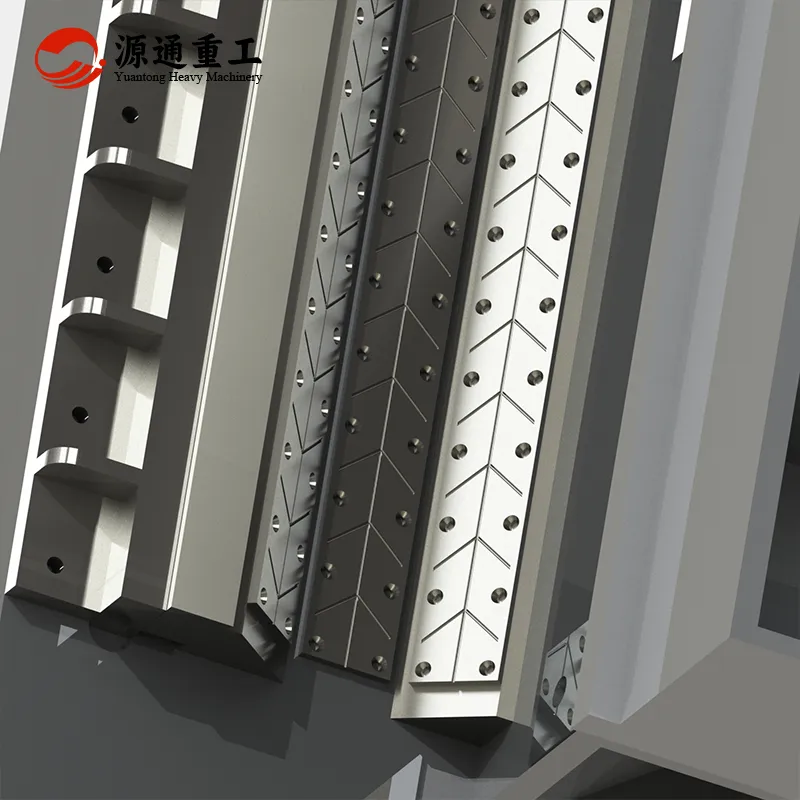
Slide guidance is the key to long-term accuracy. In conventional designs the moving slide block rubs directly against the guide rails; once worn, the clearance grows, causing skewed cut faces or even blade jamming. Improved designs fit wear-resistant strips on both sides of the guide rails so the slide block does not wear the body directly, reducing unplanned downtime. This detail is usually not stated in catalogs, but it directly determines cut quality after two or three years of service.
Mainstream gantry shears cover a shear force of 200–2,000 tons, blade lengths of 1,200–3,000 mm, and shearing rates ranging from 3–5 strokes/min depending on the pump station design. The feed box is typically over 6-8 m long and requires a material handler or overhead crane for loading.
Hydraulic System Configuration
The hydraulic station is the power heart of the machine. The conventional solution uses asynchronous motors driving fixed-displacement pumps—simple in structure and controllable in cost, but with high no-load losses and elevated power consumption during continuous operation.
The improved solution uses permanent-magnet synchronous servo motors driving axial piston pumps, with multiple units acting in sync and a multi-function cartridge valve controlling the circuit. The servo motor's advantage is on-demand oil supply: full output during shearing, rapid release on return, and no idle consumption between cycles. In practice, return speed is faster and cycle time can improve from roughly 3 strokes/min with the asynchronous solution to 5 strokes/min. For recycling yards with high daily throughput, the electricity cost difference is significant over the equipment's service life; if incoming material is mainly light scrap and cycle time requirements are modest, an asynchronous pump station remains a reasonable choice.
Motor power scales with tonnage: 37 kW × 2–3 units is common for 400–630 ton classes, while 800 ton and above can reach 45 kW × 4-5 units. The actual installed power of a servo solution can be somewhat lower because PM synchronous motors do not idle.
Feed and Hold-Down Configuration
The feed method determines how well the machine matches the incoming material. Cylinder feed offers high thrust and simple structure, suited to heavy scrap and large-section structural steel; hydraulic motor feed is compact and more accurately positioned, suited to medium-size continuous shearing; servo feed offers the highest precision at a correspondingly higher cost.
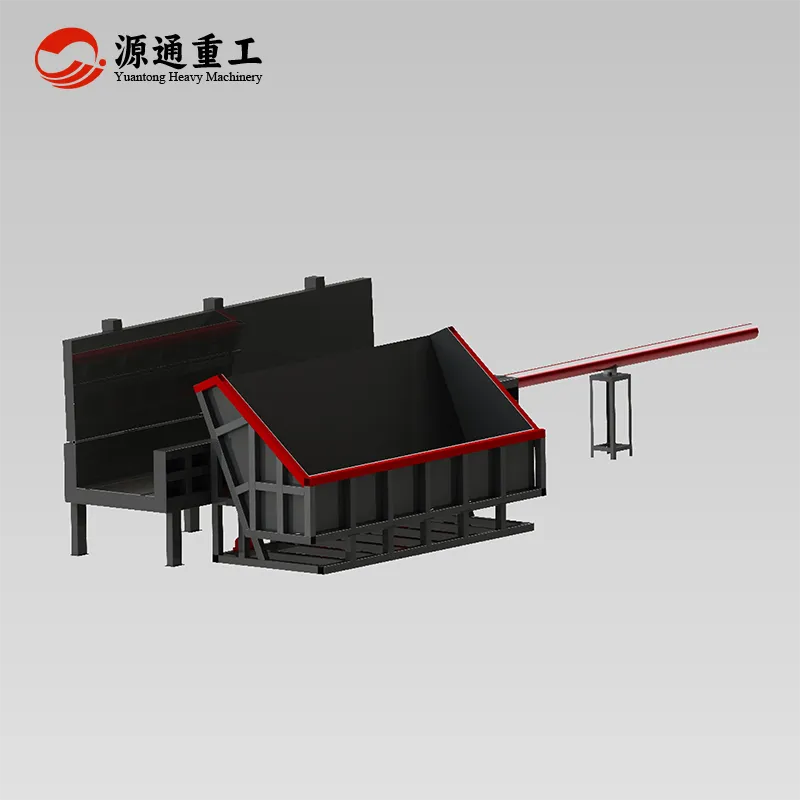
Side-compression cylinders on the feed box are a practical option for vehicle dismantling yards and large incoming material. End-of-life vehicle shells, large containers, and similar items that cannot enter the blade gap directly are first compressed by the side cylinders and then fed into the shear zone, eliminating a separate pre-processing step. If incoming material is mainly already-baled blocks or regular structural steel, this option is redundant.
The role of the hold-down mechanism is often underestimated. If light scrap is not clamped firmly, it curls and springs at the moment of shearing—at best producing a torn cut face, at worst jamming the blade gap. The independent pressure of the hold-down cylinder and the contact area of the hold-down pad must match the material characteristics; the hold-down strategy for rebar and for vehicle shells is not the same.
Blade Gap and Cut Quality
The gap between upper and lower blades directly determines cut-face quality. When shearing thin plate, the gap must not exceed 1/30 of the plate thickness; otherwise the material is torn rather than sheared, and burr increases markedly. Blade material is typically high-hardness wear-resistant tool steel heat-treated to HRC 58–62, but actual cut quality depends more on how conveniently the gap can be adjusted when switching material types. Purchasers should ask for a demonstration of the blade-setting procedure rather than focusing only on hardness figures.
Summary of Typical Technical Parameters
The table below gives reference ranges for common tonnage classes. Actual values vary considerably between manufacturers due to pump station design and options; the technical agreement governs.
| Shear force (tons) | Blade length (mm) | Strokes (per min) | Motor power ref. | Typical application |
|---|---|---|---|---|
| 500 | 1,400–1,650 | 3-5 | 37×2 | Small-to-medium recycling points, mainly structural steel and offcuts |
| 630 | 1,600–1,950 | 3-5 | 45×3 | Medium recycling yards, handling both heavy scrap and light scrap |
| 800 | 1,800–2,000 | 3-5 | 45×4-5 | Vehicle dismantling or mixed incoming material; side compression optional |
| 1,000–1,250 | 2,000–2,200 | 3-5 | 45×4–8 | Large processing centers with high continuous duty |
Technical Specifications
| Model | Shear Force (t) |
Blade length (mm) |
Shear Frequency (times/min) |
Power (kw) |
Working pressure (Mpa) |
Box size | ||
| Q91Y-315 | 315 | ≤1200 | 3-5 | 60 | 28 | 5000*1100*550(750) | ||
| Q91Y-400 | 400 | ≤1500 | 3-5 | 80 | 28 | 6000*1300*650(850) | ||
| Q91Y-500 | 50 | ≤1600 | 3-5 | 80 | 28 | 6000*1500*750(950) | ||
| Q91Y-630 | 630 | ≤1800 | 3-5 | 135 | 28 | 8000*1700*800(1100) | ||
| Q91Y-800 | 800 | ≤2000 | 3 | 180 | 28 | 8000*1900*900(1200) | ||
| Q91Y-1000 | 1000 | ≤3000 | 3 | 270 | 28 | 8000*2900*900(1200) | ||
| Q91Y-1250 | 1250 | ≤3000 | 3 | 315 | 28 | 8000*2900*900(1200) | ||
| Q91Y-1500 | 1500 | ≤3000 | 3 | 450 | 28 | 8000*2900*1000(1300) | ||
| Q91Y-2000 | 2000 | ≤3000 | 3 | 540 | 28 | 8000*2900*1100(1400) | ||
| For more information, please contact us: 8615736727558 hnytzgjx@163.com | ||||||||
FAQ Section
Frequently Asked Questions!
Find answers to frequently asked questions about our products, services, and policies—all your queries will be addressed here.

Who should buy an alligator shear instead of a gantry shear?
Buyers who need flexibility, simple installation and low running costs, handling individual pieces rather than bulk flat scrap. Limited by piece size? Move up to a gantry shear.
Does it need a foundation?
Small or portable machines need only a level, load-bearing surface. Larger machines benefit from a simple concrete foundation with anchor points: an unsecured machine loses cutting accuracy.
Can it run continuously or only make single cuts?
It is a single-stroke machine, so throughput comes from cycle time and handling speed. That is why alligator shears are chosen for flexibility rather than for high volume.
What blade lengths and cutting forces do you offer?
Blade lengths of 600-1200mm and cutting forces from 63 to 400. Blade length sets the widest piece; force sets how thick that piece can be.
Does it have its own power unit — diesel or electric?
Diesel Or Electric. Electric is preferred where a suitable supply exists because it costs less to run; diesel suits remote sites or frequent relocation.