
Troubleshooting
How to Resolve Hydraulic Oil Leakage Issues in Scrap Metal Balers
For any scrap yard operator, a puddle of hydraulic oil under a baler isn't just a mess-it’s a symptom of lost profit, potential fire hazards, and impending downtime. In my years as a field engineer, I’ve seen that 80% of hydraulic failures are preceded by a leak.
While many view leaks as "normal" for heavy machinery, a well-engineered scrap metal baler should remain dry. Resolving these issues requires moving beyond just tightening a bolt; you must understand the mechanical and thermal stresses that cause seals and joints to fail.
1. The Root Cause: Heat is the Silent Killer
In the high-pressure environment of a metal baler, hydraulic oil temperature is the most critical factor.
Engineer’s Logic:When oil temperature exceeds 60°C (140°F), standard NBR (Nitrile) seals begin to harden and lose their elasticity. Once a seal becomes brittle, it can no longer compensate for the microscopic gaps between moving parts.
The Fix:If you are experiencing chronic leaks, check your cooling system first. Are the heat exchanger fins clogged? Is the water flow sufficient? Maintaining oil temperature between 35°C and 50°C is the most effective way to extend seal life by 200%.
2. Vibration and Mechanical Shock: The "Loosening" Effect
Metal baling is a violent process. The sudden release of pressure at the end of a stroke creates hydraulic shocks (water hammer) that vibrate the entire pipe network.
Experience Tip:Over time, these vibrations back off threaded fittings and cause fatigue cracks in welded joints.
The Fix:Do not just re-tighten a leaking fitting. Inspect the pipe clamps. If a pipe is allowed to vibrate, the fitting will eventually leak again. We recommend using high-quality pipe clamps with rubber inserts and ensuring all high-pressure hoses have enough "slack" to absorb the movement of the cylinders.
3. Piston Rod Damage: Scratches and Bending
The main ram of a scrap baler is exposed to sharp metal shards. If a piece of scrap metal gets caught and scratches the chrome plating of the piston rod, it creates a pathway for oil to bypass the gland seals.
Expert Insight:A single deep scratch can destroy a new set of V-packing seals within hours.
The Fix:Inspect the rod surface. If you feel a burr, it can sometimes be carefully polished out with fine emery cloth. However, if the rod is "scoring" repeatedly, your guide bushes are likely worn, causing the rod to move off-center. Replacing seals without checking the guide bushes is a waste of time.
4. Seal Selection: Stop Using Cheap Replacements
In the B2B world, the cost of the seal is negligible compared to the cost of the labor to install it.
Field Reality:Many generic seal kits use low-grade materials that swell when they contact certain hydraulic additives.
The Fix:Always specify High-Performance Polyurethane (PU) or Viton seals for high-pressure zones. These materials offer much higher abrasion resistance and thermal stability than standard rubber.
5. Maintenance Checklist for a Leak-Free Baler
Daily Visual Inspection:Look for "weeping" at cylinder glands before they become "gushers."
Accumulator Check:Ensure your hydraulic accumulators are properly charged; they act as shock absorbers for the system.
Oil Analysis:Contaminated oil acts like liquid sandpaper, grinding down your seals from the inside out.
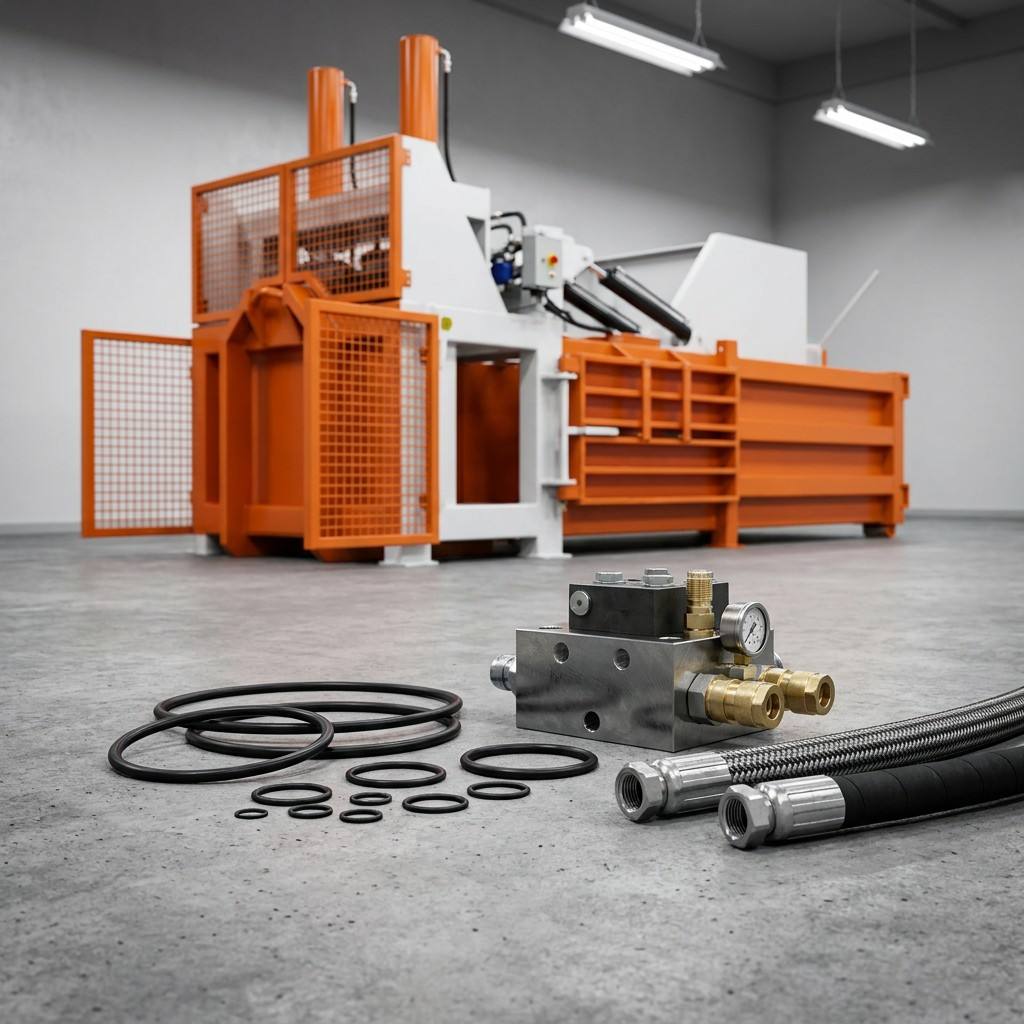
Get a Technical Audit for Your Hydraulic System
Chronic leaks are often a sign of a deeper design flaw, such as poor pipe routing or insufficient cooling. If your maintenance team is stuck in a cycle of "fix and fail," contact our engineering department. We provide comprehensive hydraulic audits to identify the root causes of leakage and help you implement a permanent solut
Online message