
Industry Insights
What Is the Difference Between a Horizontal and Vertical Metal Baler
The main difference between a horizontal and vertical metal baler is the direction of compression. A vertical baler presses material downward, while a horizontal baler compresses it sideways. Vertical machines generally suit smaller, intermittent batches and limited floor space. Horizontal machines are commonly selected for higher volumes and integrated material handling.
However, orientation alone does not determine material suitability, bale density, or operating capacity. For industrial buyers, the right choice depends on the scrap stream, loading method, finished-bale requirements, and total operating cost.
How Does a Vertical Metal Baler Work?
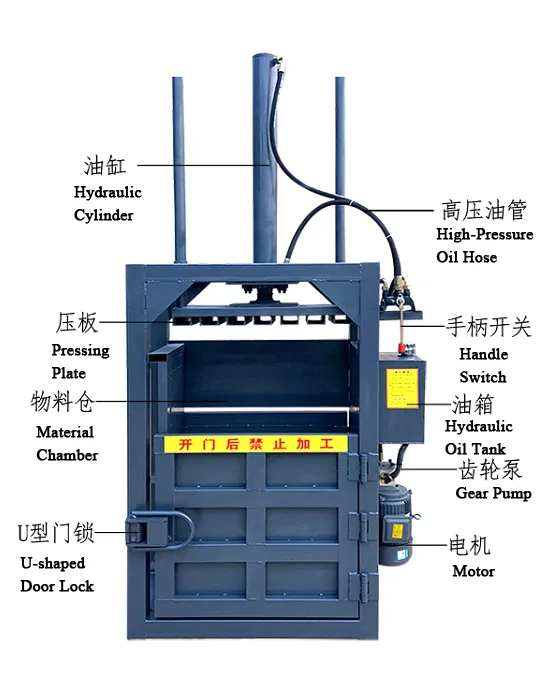
A vertical metal baler uses a hydraulic ram to compress material downward inside a chamber. In a typical batch operation, an operator loads suitable scrap, runs compression cycles, and removes the finished bale according to the machine’s operating procedure.
Metal-rated vertical balers can handle selected materials such as aluminum cans and suitable non-ferrous production scrap. Their smaller footprint makes them practical where floor space is restricted or material arrives in occasional batches.
Not every vertical recycling baler is designed for metal. Buyers should verify the permitted material types, thickness limits, loading dimensions, and bale-removal requirements for the specific model.
How Does a Horizontal Metal Baler Work?
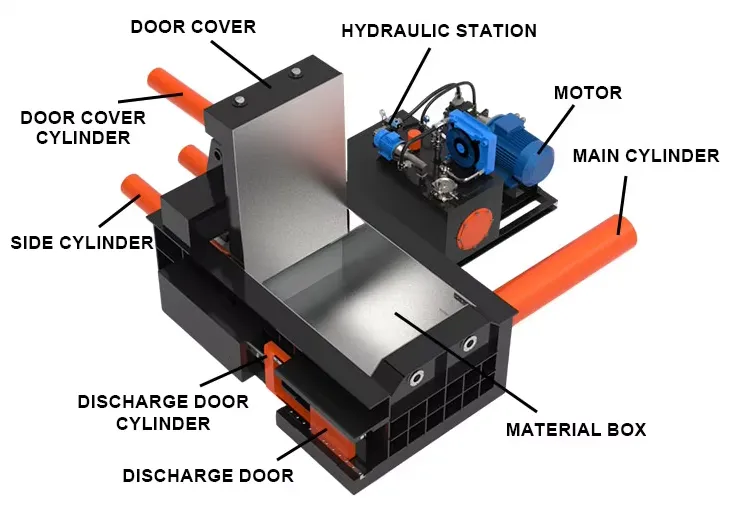
A horizontal metal baler uses a ram that moves sideways to compact scrap. Depending on the configuration, material may enter through a hopper, conveyor, bin tipper, or another feeding system.
Horizontal machines range from manually operated batch presses to more automated systems. Some use a single main compression direction; specialist scrap-metal presses may compress from several directions. Consequently, the term “horizontal baler” does not describe one universal operating cycle.
These machines are often suitable for recycling centers and manufacturing plants that need regular processing and coordinated feeding. Dedicated non-ferrous models can process materials such as aluminum cans and lithographic plate, subject to their specifications.
Horizontal vs Vertical Metal Baler: Key Differences
Factor | Vertical metal baler | Horizontal metal baler |
Compression direction | Downward | Sideways |
Typical workflow | Intermittent batch processing | Batch or more integrated processing |
Floor-space | Usually smaller | Usually larger |
Feeding arrangement | Commonly manual loading | Manual, conveyor, or mechanical feeding |
Automation potential | Often more operator-dependent | Typically offers more integration options |
Typical application | Smaller volumes metal scrap | Higher-volume |
These are general tendencies, not fixed rules. Compare actual machine specifications and demonstrated performance rather than relying on category labels.
Which Baler Produces Better Bales?
Horizontal balers often offer greater compaction capability, but a horizontal design does not automatically guarantee a denser or more valuable bale. Material properties, compression force, chamber geometry, and operating settings also influence the result.
Start with your downstream buyer's requirements. Confirm acceptable bale dimensions, weight, composition, and handling characteristics. Request a sample bale or material trial before committing to equipment.
Likewise, do not assume every metal baler requires wire tying. Bale retention and discharge methods vary by design, so ask the supplier to demonstrate the complete process.
How to Choose the Right Machine
A vertical metal baler may be appropriate when approved scrap volumes are modest, floor space is limited, and staff can manage batch loading and bale removal.
A horizontal machine may be more suitable when consistent material flow, mechanical feeding, or higher output justifies a larger installation.
Before comparing quotations, provide suppliers with:
· Material photos, grades, thicknesses, and maximum dimensions.
· Daily volume and available operating hours.
· Required bale specifications.
· Loading equipment and site layout.
· Local power supply and installation conditions.
Compare labor, energy, maintenance, handling equipment, and service support—not just purchase price. Ask suppliers to substantiate throughput using material comparable to yours.
Find a Baler That Matches Your Operation
Neither design is universally better. The best metal baler fits your material, workflow, available space, and buyer requirements.
Send our factory your scrap photos, processing targets, and preferred bale dimensions. We can review your application and recommend a suitable configuration for technical evaluation.
Online message