
Industry Insights
Market trends, recycling technology and machine selection guides for scrap yard operators, written by the engineers who build the equipment. Good machines, built by Yuantong.
What Types of Materials Can a Vertical-Shaft Metal Shredder Process
In the metal recycling industry, equipment selection often determines the difference between a high-margin product and a pile of low-value waste. While horizontal hammer mills are the standard for bulk scrap car shredding, the Vertical-Shaft Metal Shredder(often called a Vertical Hammer Mill or VSI Shredder) has carved out a specialized niche. As an engineer who has designed and commissioned these lines across various continents, I often get asked: "Can I just use this for everything?" The short answer is no. Vertical shredders are "polishing," "liberating," and "densifying" machines. They are designed for specific material streams where purity, separation, and bulk density are the primary requirements.
1. The Engineering Logic: Why "Vertical" Matters
To understand what it can process, you must understand how it works. Unlike horizontal shredders where material exits through a bottom grid quickly, a vertical-shaft shredder uses gravity and centrifugal force to keep material in the chamber longer.
Material is subjected to intense multi-stage impact, grinding, and friction.
The "Ball-up" Effect: The friction causes malleable metals (like copper and aluminum) to curl into dense spheres.
The "Polishing" Effect: The intense surface-to-surface contact strips away paint, rubber, and rust without chemicals.
2. Optimized Material Streams for Vertical Shredders
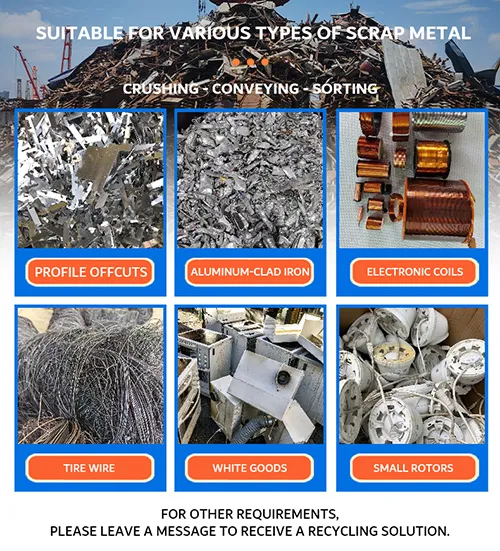
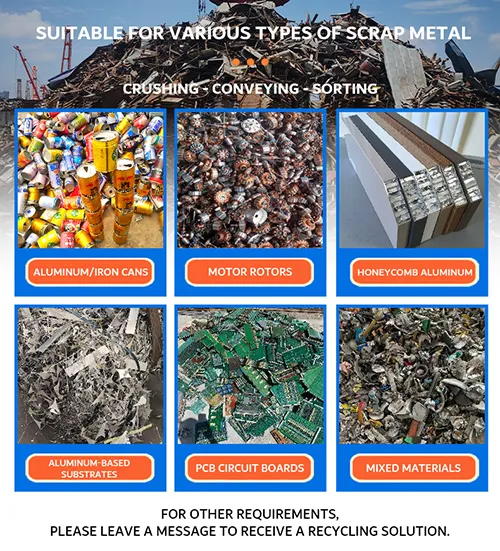
Based on field data and actual processing trials, the following materials yield the best ROI when processed through a vertical-shaft system:
A. Electric Motor Rotors (Small & Medium)
This is perhaps the most iconic application for vertical shredders.
The Challenge: In a rotor, copper windings are tightly embedded in steel laminations.
The Solution:The vertical mill’s impacting action shatters the brittle silicon steel sheets into flat flakes while simultaneously "balling up" the copper. Because the copper is rubbed into balls, it becomes much heavier and cleaner, making downstream magnetic and gravity separation nearly 99.5% efficient.
B. Contaminated Tyre Steel Wire (Polishing)
When steel wire is extracted from scrap tyres, it is almost always coated in residual rubber. This "dirty" wire is often rejected by steel mills or sold at a deep discount.Engineering Reality:The vertical shredder acts as a mechanical polisher. The high-speed friction generates just enough heat and impact to "peel" the rubber off the wire. The result is clean, shiny steel wire and fine rubber powder, significantly increasing the market value of the scrap steel.
C. Aluminum Scrap (Profiles, Castings, and UBC)
Aluminum Profiles:Clean or painted profiles are shredded into dense nuggets. The vertical action is particularly effective at stripping thermal break plastic and paint.
Used Beverage Cans (UBC):While light, vertical shredding turns them into high-density pellets, reducing "burn loss" in the furnace.
D. Electronic Waste (WEEE) and Small Appliances
Small Domestic Appliances (SDA):Items like kettles and blenders.
Hard Drives:The vertical mill effectively destroys data plates while separating the aluminum casing from the stainless steel and PCB components.
E. Pre-shredded Light Steel Scrap
If you take the output from a primary double-shaft shredder (50mm-100mm pieces), the vertical mill will strip any remaining paint or zinc coating and increase the bulk density from 0.5 tons/m³ to over 1.2 tons/m³.
3. Core Components: Built for the "Battlefield"
A vertical shredder is a high-wear environment. To maintain consistent processing, we focus on three critical areas:
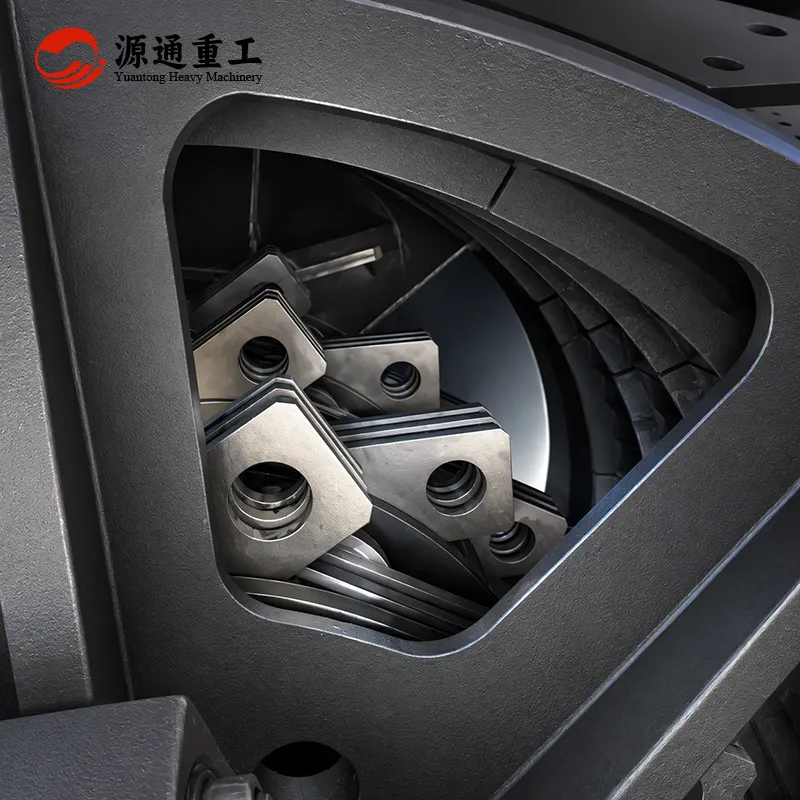
The Rotor: A forged shaft with multi-stage hammer discs. Balance is critical; even a minor imbalance at 600 RPM can cause catastrophic vibration.
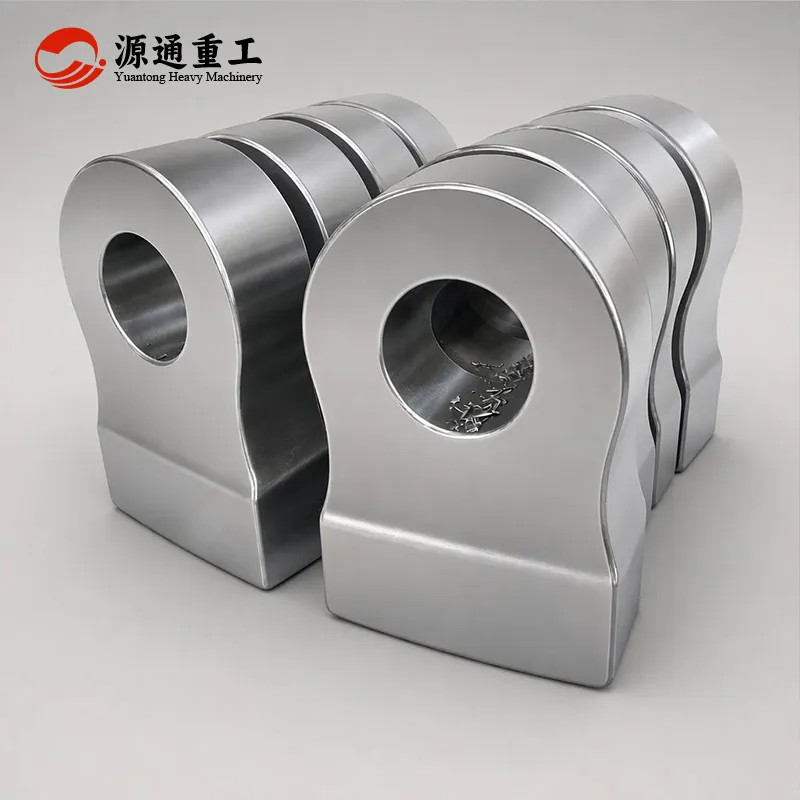
Hammers: We use high-manganese steel. In vertical mills, the bottom-tier hammers wear faster because they perform the final "polishing" and "densifying."
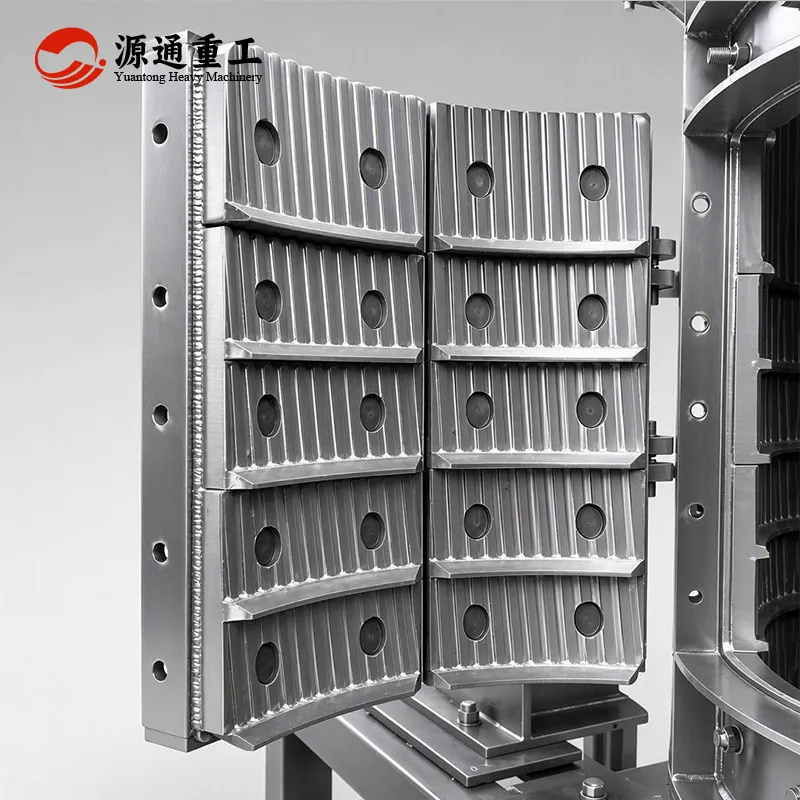
Liner Plates:These are the "anvil" for crushing. We use NM500 or higher wear-resistant liners with a corrugated profile to maximize the grinding effect.
4. Maintenance: The Engineer's Routine
Hammer Management:Vertical hammers wear primarily on the leading edge. Regularly flipping them ensures you get the full wear-life from the manganese.
Bearing Lubrication:The vertical thrust bearing carries the entire rotor weight plus impact loads. We recommend a continuous automatic greasing system.
Liner Inspection:If a liner plate falls off, it will destroy the rotor. Check mounting bolts every 100 working hours.
5. Application Case: Copper Recovery from Rotors
A client was struggling with recovering copper from automotive starters and alternators. Their previous shredder left the copper tangled with the steel. We implemented a Vertical-Shaft Shredder as a second-stage processor.
Input: 50mm pre-cut rotor pieces.
Result:The copper formed into heavy spheres, while the steel was flattened and easily removed by magnets.
ROI:The purity of the copper rose to 97.5%. The client recovered the investment within 9 months.
Conclusion: Is a Vertical Shredder Right for You?
The vertical-shaft metal shredder is a liberation and purity specialist. Whether you are "polishing" tyre wire or "liberating" copper from rotors, this machine ensures your output meets the highest mill-ready standards.
Contact our Engineering Team for a Technical Consultation.
Online message