
Troubleshooting
What Materials Can a Double Shaft Shredder Process
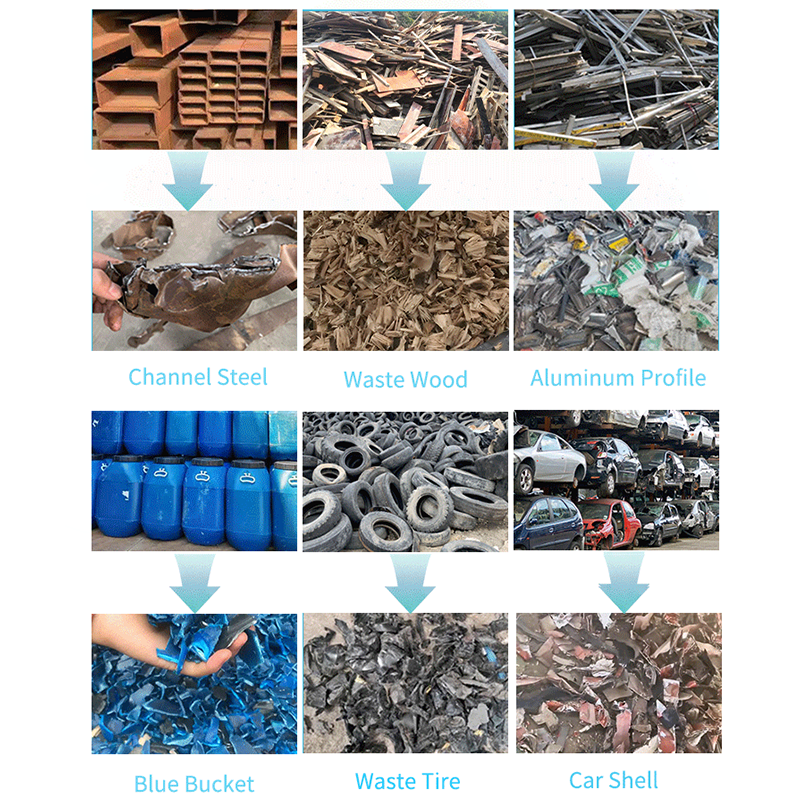
A double shaft shredder is one of the most versatile size-reduction machines in industrial recycling — but it is not a universal shredder. Its strength lies in handling bulky, contaminated, and mixed material streams that would stall a high-speed single-shaft cutter. So what materials can a double shaft shredder actually process? Below is a practical, material-by-material breakdown to help you decide whether this machine fits your feedstock.
Why Material Type Matters
A double shaft (twin-shaft) shredder uses two counter-rotating shafts fitted with intermeshing cutting discs that grab, shear, and tear material apart at low speed and high torque (typically 10–20 RPM). This makes it ideal for tough, irregular, or contaminated feedstock — but the material type drives which contamination the machine must handle and which downstream step follows .
The defining rule: a double shaft shredder is best for bulky, contaminated, or mixed waste streams — not for clean, uniform materials that need a precise, uniform output size (those are better suited to a single-shaft shredder or granulator).
Materials a Double Shaft Shredder Can Process
1. Tires and Rubber
Whole car, truck, and OTR tires, rubber hoses, conveyor belts, and rubber waste. The high-torque shearing action opens the rubber matrix around embedded steel belts, reducing whole tires into 50–150 mm chips for tire-derived fuel (TDF), rubber mulch, and crumb rubber. Blade material: H13 / SKD11 for steel-cord abrasion resistance.
2. Scrap Metal
Aluminum profiles, copper cables and radiators, steel sheet offcuts, light scrap, tin cans, and light iron. Heavy-duty models with hardened blades can shred light scrap metal and metal composites. For thick steel plate and heavy steel structures, a hydraulic gantry shear is more appropriate. Blade thickness: 75 mm or above for metal feed.
3. Plastics
Plastic lumps, purgings, pipes, drums, IBC tanks, PET bottles, plastic film, and large injection-molded parts. The double shaft handles bulky, hollow, or contaminated plastic that would bridge or jam a single-shaft machine. For clean film and bottles requiring uniform flakes, a single-shaft shredder or granulator follows downstream.
4. Wood and Biomass
Wood pallets, branches, roots, waste wood, furniture, plywood, MDF, and biomass feedstock. The shredder produces coarse wood chips for biomass fuel, particleboard feedstock, or RDF (refuse-derived fuel) production. Blade thickness 40–50 mm is standard.
5. E-Waste and WEEE
Refrigerators, washing machines, computers, servers, circuit boards, cable harnesses, and small appliances. The machine opens housings and liberates metals from plastic for downstream sorting. Contamination to plan for: mixed metals, glass, and refrigerants. A four-shaft shredder or granulator may follow for finer, uniform output.
6. Paper and Confidential Documents
Cardboard, books, archive boxes, and confidential files requiring secure destruction. The double shaft provides primary coarse shredding before a fine granulator for security-grade particle size.
7. Municipal Solid Waste (MSW) and RDF
Mixed household and commercial waste, bulky refuse, and pre-sorted residual streams. The double shaft opens bags and reduces bulky items for sorting lines, composting, or RDF production. Contamination: mixed plastics, metals, organics, and inert materials.
8. Medical and Hazardous Waste
Contaminated packaging, medical devices, drums, and IBCs requiring destruction and volume reduction before incineration or sterilization. Specialized sealed and washable chamber designs are used.
9. Textiles and Fiber
Fabric waste, carpet, textiles, and fiber from tire recycling. Air classifiers or zigzag separators handle the textile fraction downstream.
10. Construction and Demolition (C&D) Waste
Mixed C&D debris including wood, plastics, drywall, and light metals. The shredder reduces bulky demolition waste for sorting and recovery.
Materials NOT Suitable for a Double Shaft Shredder
To set realistic expectations, a double shaft shredder is not the right choice for:
· Clean plastic film and bottles needing uniform flakes — use a single-shaft shredder + granulator
· Thick steel plate and heavy steel — use a hydraulic gantry shear
· Fine powder production (e.g., rubber powder below 1 mm) — requires a granulator or fine grinding mill
· Materials requiring very precise, uniform output size — a single-shaft shredder with a screen gives more consistent particles
Quick Material Reference Table
| Material | Suitable | Blade Thickness | Typical Output | Downstream Step |
|---|---|---|---|---|
| Car / truck tires | Yes | 40–50 mm | 50–150 mm chips | Steel liberation, granulation |
| OTR / heavy tires | Yes | 75 mm | 75–200 mm | Debeading, magnetic separation |
| Aluminum, copper cable | Yes | 50–75 mm | 30–100 mm | Sorting, granulation |
| Thick steel plate | No | — | — | Use gantry shear |
| Plastic lumps, drums, IBCs | Yes | 40–75 mm | 30–80 mm | Granulation if uniform size needed |
| Plastic film, PET bottles | Yes (primary) | 25–40 mm | 50–100 mm | Single-shaft / granulator |
| Wood pallets, biomass | Yes | 40–50 mm | 30–80 mm | Screening, pelletizing |
| E-waste, refrigerators | Yes | 40–75 mm | 30–100 mm | Metal sorting, granulation |
| Cardboard, documents | Yes | 25–40 mm | 50–100 mm | Fine granulator (secure destruction) |
| MSW / RDF | Yes | 50–75 mm | 50–200 mm | Sorting, screening |
| Medical / hazardous waste | Yes (specialized) | 40–75 mm | 30–100 mm | Incineration, sterilization |
How to Know If Your Material Fits
A double shaft shredder is the right choice when your feedstock matches most of these conditions:
1. Bulky or irregular shape that won't feed cleanly into a high-speed rotor
2. Contaminated or mixed — contains metal, dirt, moisture, or multiple material types
3. Tough and resilient — rubber, steel cord, thick plastic, or composite materials
4. Coarse output is acceptable — you don't need precise, uniform particle size at this stage
5. High-volume continuous processing — several tons per hour
If your material is clean, uniform, and needs a precise output size, a single-shaft shredder or granulator is more efficient and cost-effective.
Blade Selection by Material
Blade choice directly affects throughput, output size, and service life:
· Blade diameter: Ø400–500 mm for tires and plastics; Ø600–800 mm for heavy tires, metal, and C&D waste
· Blade thickness: 25–40 mm for light materials (paper, film); 40–50 mm for tires, wood, plastics; 75 mm+ for metal and heavy composites
· Blade material: 9CrSi (general purpose, cost-effective); H13 / SKD11 and Cr12MoV (high hardness for metal and contaminated waste)
· Hook type: Single-hook (most versatile); multi-hook (better grabbing on soft, bulky materials)

Leave a Message